
The Witching Hour Design Diary - Pt 1: Inspired & A-Mazed
Before The Witching Hour became the game it is today, it was a gift. Rebecca Channon built it as a Secret Santa present, meant for one person to unwrap, solve, and enjoy. It existed in the way that many good ideas start out: privately, with no stakes beyond giving the recipient a nice holiday. But why not spread the spooky cheer a bit further? On May 1, 2024, Rebecca asked if we take submissions, to which we responded, "Sort of." What followed was less a pitch than a slow realization that what she'd made for one person was interesting and unique enough that we wanted to develop it into a product that many more people could enjoy.
This series of design diaries follows the whole arc of The Witching Hour's creation, from the mazes and witch trials that seeded the earliest ideas, through the work of turning a handmade prototype into a game ready for your table. In this first installment, you can read about the inspirations for the game in the creator's own words:
Mazes
From the very start of the design process, I knew I wanted my game to involve a maze. I have always been fascinated by mazes, both on paper and in real life, and I wanted this game to be a love-letter to the form. I grew up relatively close to Hampton Court Palace, which features the UK’s oldest surviving hedge maze, so I was lucky enough to visit it several times during my childhood. It’s the perfect example of the classic maze and has a cleverly designed route that makes it tricky to complete, despite its relatively small size.

When visiting Vienna, I remember insisting on trying the maze at Schonbrunn Palace, which had a raised bridge as part of it. This was an exciting break in the form and got me thinking about how the rules could be bent to play with height as well.

The idea of incorporating bridges is taken to further extremes at the Dream of Poliphilo maze at the Chateau de Thoiry in France.

I was even lucky enough to visit a maize maze, once they crossed the Atlantic from America to the UK. In this maze there weren’t hedge walls surrounding you, but temporary crops, and a new footprint could be made every year if needed. The one I visited also had clearings with clues to a puzzle that could be solved if you found them all, adding another dimension of interest.

But while these are all excellent classic, relatively traditional mazes, the maze form is capable of so much more than that. While researching mazes, I found some interesting ways that people have experimented to create something almost unrecognisable as a maze, while still maintaining the crucial solving pattern that makes them so addictive.
For example: a Colour Maze, where there are plenty of routes to the centre, but restrictions on which ones can be taken in which order. Different coloured paths run between various points, such as a network of stars, and you have to change which colour of path you are following every time you get to one of these points (for instance, you must follow the order green-orange-blue in your steps). This creates restrictions beyond the traditional “hedge in the way” barrier.

Twists on that format could involve being forced to reverse direction every time you get to a specific point, having certain paths be one-way only, or being forced to follow certain directions as indicated by arrows. The Archery maze was invented in 1999, which is coincidentally is also the year The Witching Hour is set in.

I was determined to have fun with the structure of mazes when designing The Witching Hour. If you play it, see if you can spot how many of the puzzles were inspired by mazes!
Witches
The next major theme I wanted to bring into the game was witches, as I have always been fascinated with the ridiculous circular logic behind witch trials.
Particularly absurd are the tests for witches where they would be submerged in water. If the defendant survived, then they would be “proven” to be a witch and would therefore be killed. They would only be considered innocent if they drowned, which would offer them very little comfort, on account of them being dead.

It’s really the pinnacle of human stupidity… Or is it actually the pinnacle of human willingness to commit evil acts in order to maintain control over others? Is it merely demonstrating the human fear of those who are different? Or the strength of superstition in giving humans the illusion of safety? Perhaps all of the above.
...So I created a modern yet isolated town, where witches are still feared and burnt at the stake.

Accidental Inspirations
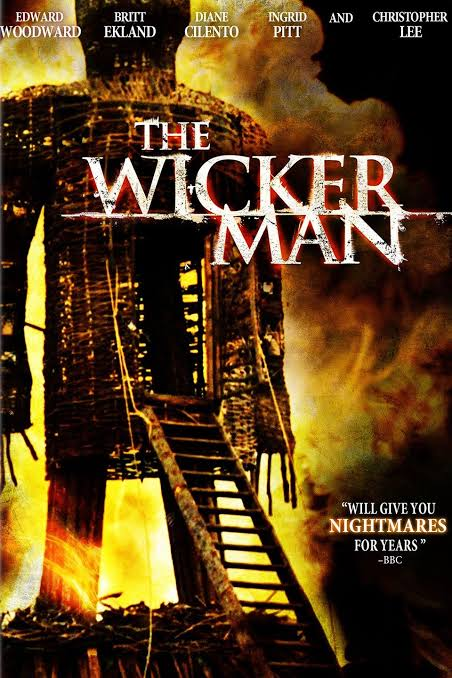
The plot of The Wicker Man may have also been an inspiration for the story in The Witching Hour, although I haven’t actually seen the film.
Another film that feels like it should have been an inspiration (as it involves a maze and a child being stolen) but I have also never seen, is Labyrinth. I’m led to believe that it involves goblins and David Bowie being iconic—neither of which the game contains, I’m sorry to say.

With all that, I now had a couple of linked concepts for the game, but what next? In the second design diary I will describe how I went about the initial design process of The Witching Hour (though at the time, the title was actually The Witch Maze).


Comments